

What the Board Doesn’t See
Playing Monopoly with my brother was a no win situation because he was so good at it, though what really dented my game was being sent to jail. Do not pass go, do not collect $200, and sit there watching everyone else move.
The thing about Monopoly is that every player can see the whole board. Nobody hides a street or quietly leaves a hotel off the table. In most organisations, the board sees something rather different: a carefully assembled view, arriving well after the events it describes.
When the Australian Human Rights Commission surveyed ASX200 companies for its report Equality Across the Board, only 19 per cent said the board held primary accountability for preventing and responding to sexual harassment, with most placing that responsibility on the CEO or the head of human resources. There’s a certain naivety in assuming that someone else is looking after harassment and bullying, and it becomes expensive once people get hurt.
Benjamin Franklin gave us “an ounce of prevention is worth a pound of cure” back in 1736, so the idea has had plenty of time to bed in.
What reaches the table

The reports that reach the table are a choice made long before the meeting.
Photo: Vlada Karpovich, Pexels (pexels-vlada-karpovich-7433847)
It’s in our nature to trust the reporting systems we’ve used for years because they’ve always seemed to work. The question worth asking is what the operational risk becomes, for a board member or a senior leader, if the data arriving on the table is incomplete. I do feel for boards, weighed down as they are by financial and compliance reporting, while the people risk, which carries exactly the same weight, is often the one nobody is watching.
Whether you employ fifty people or five thousand, your biggest asset is your people, so you need to know what’s really happening in the day to day work of your organisation. Governance accountability points directly at the board. It takes a great deal for someone to leave a job they’ve invested in, which is why staff turnover, a lag indicator, tells you about harm long after the moment when you could have prevented it.
Seeing harm before it lands
A leading indicator works differently because it tracks the work itself, exposing unsafe conditions before harm occurs.
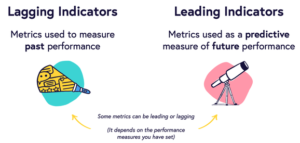
Lag indicators tell you harm has happened; leading indicators track the work itself.
Many everyday conditions contribute to workplace stress and cause real harm without ever looking unusual or catastrophic, so they slip under the radar. Incivility, micro-harassment, the slow erosion of belonging, racism, the denial of career progression and a lack of equity all wear away at trust and lead to disengagement.
Operational risk that comes with employing people belongs on the agenda at every board meeting.
Ticking the box
Tick box activity produces a green, ‘all is well’, dashboard that tells the board its boxes are ticked rather than whether its people are safe. Survey results that never see the light of day are another favourite form of box ticking. They do more damage than people realise, since asking for views then doing nothing with them teaches everyone that speaking up changes nothing and people feel they’ve been set up to fail. What closes the gap is the questions the board asks once the right data is in front of it, along with the actions they take to mitigate the risk.
What you see as a board member is a choice the organisation made long before the report reached the table. That report needs to include the measures being taken to prevent harm, not simply the incidents that have already occurred.
Nobody wins by counting the money
Nobody really wins Monopoly by counting the money at the end, since the game is decided much earlier by what you noticed then did something about. Boardrooms work in much the same way and that’s where the analogy stops being a game: the money on the table gets the attention while the assets that generate it are left to fend for themselves. In a business your people are those assets, so the losses show up as people rather than paper.
Key points
What’s happening now
Boards are shown lag indicators, which report harm after it has happened.
Everyday conditions such as incivility and the erosion of belonging rarely reach formal reporting.
A green dashboard shows compliance activity rather than evidence that prevention is working.
What reaches the board is a choice made long before the meeting.
What makes the difference
Add leading indicators that track the work itself, such as workload, role clarity, how long concerns take to resolve and whether consultation leads to action.
Ask what isn’t in the report, and why.
Put psychosocial risk on the agenda at every meeting rather than after an incident.
Require information regarding the prevention measures taken, not only the incidents recorded.
Give managers the support they need, since they hold the system together.
Sources
Australian Human Rights Commission, Equality Across the Board: Investing in Workplaces that Work for Everyone (2021), commissioned by the Australian Council of Superannuation Investors.
Header photo: mibernaa, Pexels. Boardroom photo: Vlada Karpovich, Pexels. Lag versus leading indicators graphic: DevelopMental Safety and Wellbeing.